
A music festival is a live event that brings performers and audiences together around music, often across multiple stages and over several hours or days. People go not only to hear artists perform but also to share emotion, feel part of a crowd, discover music, and step outside everyday routines. Research on music and social bonding suggests that singing, dancing, and moving together can foster connection; meanwhile, large events such as Glastonbury and Coachella show how live music becomes a setting for identity, community, and cultural expression. These motivations help explain festivals’ enduring appeal—and why their benefits depend on thoughtful planning for safety, access, and wellbeing.
Festivals create collective experience through shared emotion
Collective experience is the sense of participating in something with other people, rather than merely watching it alone. Sociologist Émile Durkheim used the term “collective effervescence” to describe the heightened energy and emotional unity people may feel during shared rituals. A festival is not identical to a religious ritual, but its crowds, repeated songs, synchronized movement, and common focus can produce comparable feelings of belonging and excitement.
Belonging and social connection
Belonging means feeling accepted as part of a group. At a festival, shared musical preferences offer an easy basis for connection: strangers sing the same chorus, exchange recommendations, or dance together without needing much conversation. Research by Eiluned Pearce, Jacques Launay, and Robin Dunbar, published in 2015, found that group singing was associated with faster development of social closeness among participants in a community singing program. The study was not a festival survey, so it cannot establish that every concert produces the same effect; it does, however, support the idea that making music together can help people bond.
Synchrony, movement, and shared emotion
Synchrony occurs when people move or act in time with one another. Dancing, clapping, and singing along can make a crowd feel coordinated, even when participants have never met. In a 2016 study in the journal Social Cognitive and Affective Neuroscience, researchers reported that moving in synchrony with others was linked to greater cooperation in a laboratory task. A festival is more complex than a laboratory experiment, but rhythm and coordinated movement offer a plausible route from a shared performance to a temporary sense of unity.
These social mechanisms explain why people often describe a standout set in terms of “being there” with others. They also lead to another motivation: festivals let people experience music as an event, not just as sound.
Live performance makes music feel immediate and memorable
Live music is music performed in real time for an audience. Unlike a recording, a performance can vary from night to night, and listeners can see the musicians, hear the crowd, and respond to changes in the room. Music psychologist Eric Clarke and colleagues describe listening as an active process shaped by context, attention, and the listener’s relationship to the performance. A festival intensifies that context by placing music within a shared physical space.
Presence, attention, and the appeal of the moment
Presence is the feeling of being absorbed in what is happening now. A favorite song played live can feel especially powerful because the audience knows the music while witnessing a version that cannot be exactly repeated. The anticipation before a headliner, a surprise guest, or a crowd singing a refrain can turn a familiar track into a distinctive memory. These experiences are personal and cannot be guaranteed by attendance alone; sound quality, sightlines, fatigue, and crowd conditions all affect them.
Discovery and musical exploration
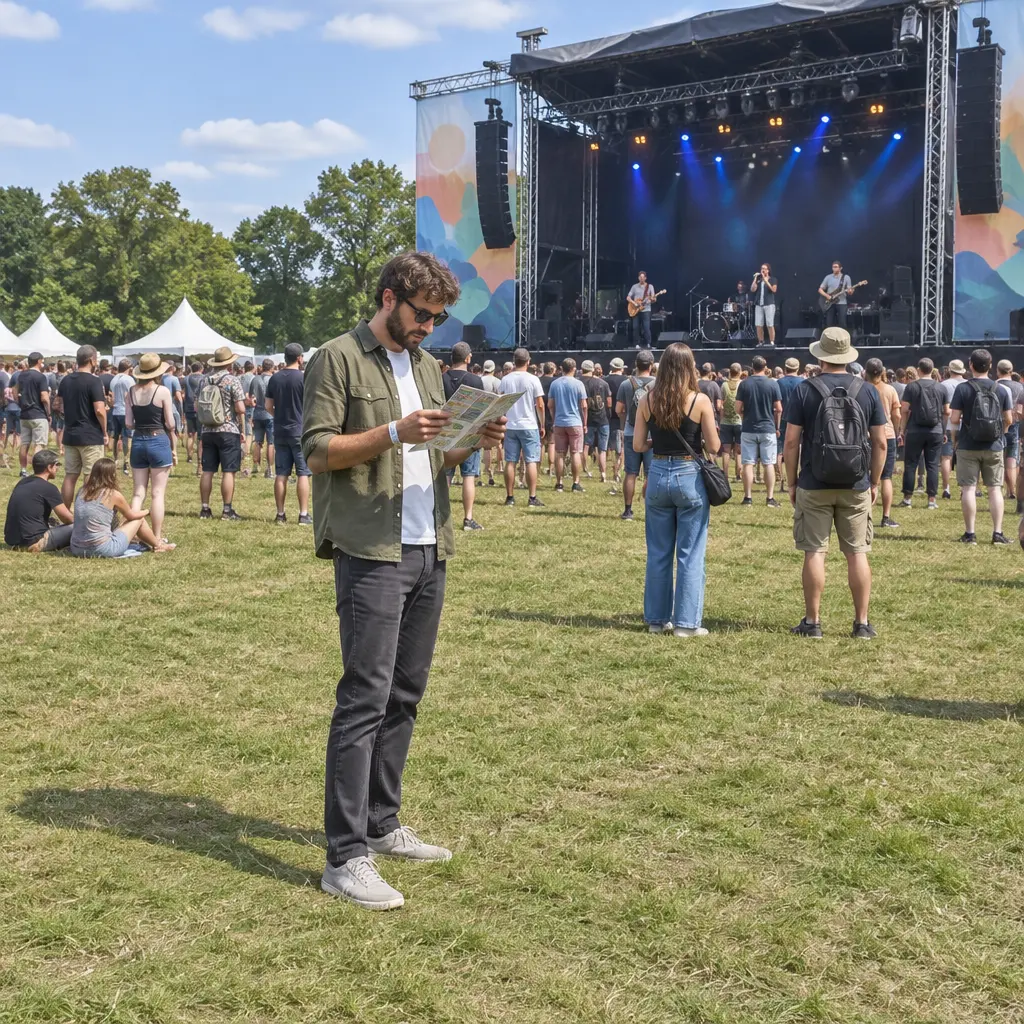
Festivals also encourage discovery: audiences can encounter unfamiliar artists while moving between stages or following a curated program. This format lowers the effort required to sample different genres and performers. The National Independent Venue Association’s 2024 report on independent live music describes the wider importance of live performance to audiences and music businesses, although its findings concern the live-music sector broadly rather than festivalgoers alone. For attendees, a lesser-known set can become a lasting memory precisely because it was unexpected.
The appeal of presence and discovery does not happen in a social vacuum. Music also gives people a way to express who they are and where they feel they belong.
Festival participation supports identity and cultural expression
Cultural expression is the communication of shared or personal meanings through practices such as music, dress, dance, and language. Festivals bring these signals together in public. A person may attend to support a favorite artist, explore a musical community, celebrate heritage, or express an identity that feels less visible in everyday settings. The motivations vary, and attendees may hold several at once.
Subcultures, taste, and self-expression
Music taste can act as a social signal: it helps people communicate preferences and recognize others with similar interests. Festival clothing, signs, dancing, and fan rituals can extend that expression beyond listening. These practices should not be treated as proof that everyone in a crowd shares the same beliefs; they are better understood as opportunities for individuals and groups to make meaning together.
Ritual, place, and cultural memory
A recurring festival can become attached to a place and its history. Glastonbury Festival, first held in 1970, has developed a recognizable identity combining music, arts, and community participation. Events such as New Orleans Jazz & Heritage Festival similarly connect performances with local culture and regional traditions. Such examples show that festivals can be more than entertainment: they may provide a stage for cultural memory, although their commercial scale and effects on local communities also merit scrutiny.
Identity and tradition help explain the meaning of festivals, while practical conditions determine whether people can participate and enjoy them. That makes wellbeing and event design part of the psychology, not an afterthought.
Festival wellbeing depends on access, safety, and design
Festival wellbeing refers to the physical and psychological conditions that allow attendees to participate safely and comfortably. Excitement can coexist with exhaustion, sensory overload, heat exposure, crowd pressure, or financial stress. The World Health Organization’s guidance on environmental noise identifies excessive sound as a health concern, while public-health guidance for mass gatherings emphasizes planning for crowd management, sanitation, medical response, and communication.
Sensory intensity and recovery
High volume, dense crowds, bright lights, and long schedules can be exhilarating for some attendees and overwhelming for others. Ear protection, quiet areas, clear schedules, water access, and opportunities to rest help people manage that intensity. The WHO recommends keeping average sound exposure below 100 decibels over 15 minutes at venues and events, alongside practical protections such as hearing protection and quiet zones. This is a guideline for sound management, not a claim that every exposure at that level is harmless.
Inclusion and the conditions for belonging
A festival cannot create genuine belonging if access barriers exclude people. Accessible routes, viewing areas, toilets, transport information, affordable options, and clear policies against harassment shape who can participate. The UK government’s Purple Guide, an industry resource for event safety, covers topics including crowd management, accessibility, and emergency planning. These operational details affect the audience’s experience directly: feeling welcome is easier when people can navigate the site, meet their needs, and trust that organizers have planned for safety.
A practical example: the festival as a designed environment
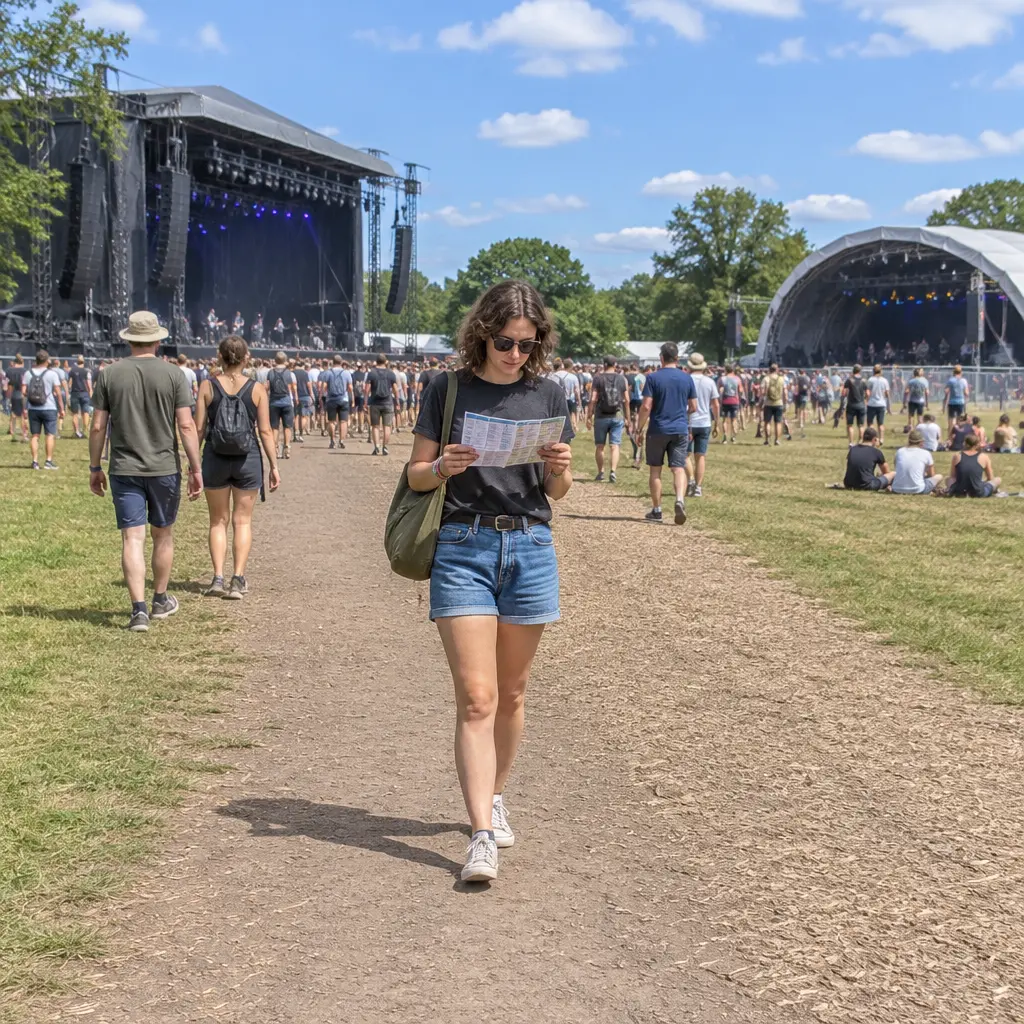
Consider a multi-stage outdoor festival. Its timetable can help attendees discover new acts, while shaded rest areas and water points reduce the strain of long days. A clearly communicated meeting point helps groups reunite, and trained staff can respond to medical or crowd concerns. The same event can offer collective excitement and still create avoidable stress if routes bottleneck or essential information is hard to find. In this sense, thoughtful design supports the psychological rewards of the event by making participation safer and more accessible.
Conclusion: why people seek festivals and shared music
People go to festivals for overlapping reasons: collective experience and belonging, the immediacy of live performance, musical discovery, identity, and cultural expression. Research on synchrony and group singing offers evidence for some social-bonding mechanisms, while real-world festivals demonstrate how music becomes connected to place, memory, and community. Those rewards are not automatic. Sound levels, access, crowd management, and opportunities to rest influence who can take part and how the experience feels.
For readers planning to attend, consider choosing a schedule that leaves room for rest, bringing suitable hearing protection, and checking accessibility and safety information in advance. For organizers, designing for inclusion and wellbeing is essential to making collective joy possible. Further reading from the World Health Organization, the Purple Guide, and research on music and social bonding can help deepen understanding of how live events affect people.
Sources: Émile Durkheim, The Elementary Forms of Religious Life, 1912; Eiluned Pearce, Jacques Launay and Robin I. M. Dunbar, “The ice-breaker effect: singing mediates fast social bonding,” Royal Society Open Science, 2015, https://royalsocietypublishing.org/doi/10.1098/rsos.150221; R. I. M. Dunbar et al., “Performance of music elevates pain threshold and positive affect: implications for the evolutionary function of music,” Evolutionary Psychology, 2012, https://journals.sagepub.com/doi/10.1177/147470491201000403; Sebastian Kirschner and Michael Tomasello, “Joint music making promotes prosocial behavior in 4-year-old children,” Evolution and Human Behavior, 2010, https://doi.org/10.1016/j.evolhumbehav.2010.04.004; World Health Organization, Global standard for safe listening venues and events, 2022, https://www.who.int/publications/i/item/9789240043114; Health and Safety Executive, The Purple Guide to Health, Safety and Welfare at Music and Other Events, https://www.thepurpleguide.co.uk/; Glastonbury Festival, History, https://www.glastonburyfestivals.co.uk/history/; New Orleans Jazz & Heritage Festival, About the Festival, https://www.nojazzfest.com/about/.
Related Posts

The Unique Vibe Of Multi Day Rock Festivals Under The Open Sky
A rock festival is a live-music event built around multiple…
What Makes a Music Festival Different from a Regular Concert
A music festival is a multi-artist event that typically spans…
How to Discover New Artists at a Festival
A festival is a live event where established headliners share…